Phone:
(701)814-6992
Physical address:
6296 Donnelly Plaza
Ratkeville, Bahamas.

Phone:
(701)814-6992
Physical address:
6296 Donnelly Plaza
Ratkeville, Bahamas.
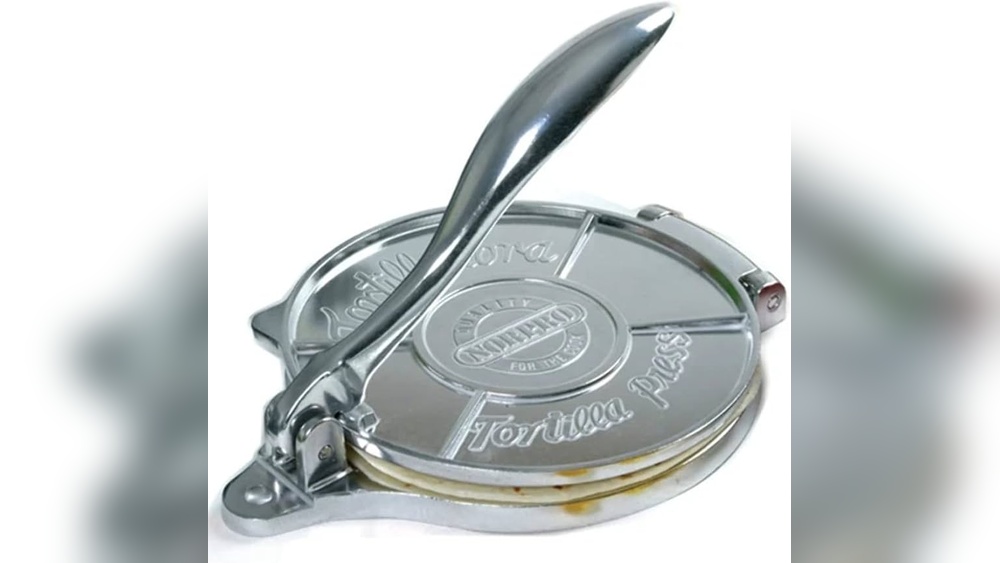
Making tortillas, rotis, quesadillas, or other flatbreads at home can be surprisingly simple when you have the right tool. A good cast iron tortilla press takes much of the work out of flattening dough, helping you create more consistent rounds without relying on a rolling pin.
Two options worth considering are a heavy-duty 8-inch press that comes with parchment papers and a smaller 6.5-inch traditional-style press. Although both use cast iron and manual pressing, they are designed for slightly different preferences. Here is what to consider before choosing one.
(Check out other products review at Homzaa)
A tortilla press works by placing a ball of prepared dough between two flat plates and applying pressure through a handle. Cast iron is particularly useful because of its weight and rigidity. Instead of the press flexing while you work, its heavy construction helps apply more consistent pressure.
These presses can be useful for much more than tortillas. Depending on the size and dough you are working with, they can help prepare rotis, tacos, quesadillas, empanadas, arepas, tostones, pita, and other flatbreads.
The main advantage is consistency. Once you learn how much pressure your particular dough requires, producing evenly shaped pieces becomes much easier.
The first option is an 8-inch heavy-duty cast iron tortilla press
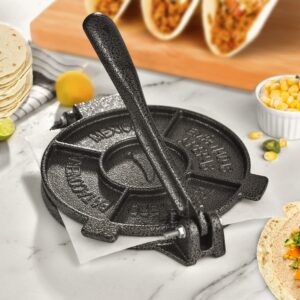
with a rust-resistant surface treatment and 100 parchment papers included. Its wider pressing area makes it particularly suitable when you want larger tortillas or flatbreads. The manufacturer also offers different sizes, including smaller and larger versions.
The second option is a 6.5-inch cast iron press
designed around a more traditional, compact format. Its smaller pressing area can work well for smaller tortillas, tacos, and similar preparations. It is also seasoned with flaxseed oil and designed for repeated use.
Both are manual presses, so neither requires electricity or complicated controls.
One of the easiest mistakes is choosing a press based only on its appearance or weight. The diameter determines the approximate maximum size of the dough you can flatten.
An 8-inch press gives you more room for larger tortillas and flatbreads, while a 6.5-inch press is better suited to smaller portions.
Think about what you normally make. If tacos and smaller corn tortillas are your priority, a compact press may be enough. If you regularly make larger tortillas or want greater flexibility, the wider press has an advantage.
Both options use cast iron, which is one of the most important features to consider. Heavy cast iron provides stability during pressing and is less likely to flex than lightweight alternatives.
The larger press weighs around 1.62 kg according to its listed specifications, while the smaller traditional press is listed at approximately 2.74 kg. That means the smaller model is actually considerably heavier despite its reduced diameter.
Weight can be helpful because a heavier press can feel more stable. However, it also means it is less convenient to move around or store frequently.
The larger model also has a reinforced handle designed to provide additional strength during pressing.
If you have ever worked with sticky dough, you know that removing it cleanly can sometimes be more frustrating than making it.
The 8-inch option includes 100 pieces of parchment paper, which can be placed between the dough and pressing plates. This helps prevent sticking and makes transferring the flattened dough easier.
Even without included parchment, using suitable sheets or food-safe alternatives can make the process considerably cleaner.
Cast iron requires more attention than some lightweight materials. The larger press is described as pre-seasoned and ready to use, while the smaller press uses a flaxseed-oil seasoning.
After washing a cast iron press, drying it thoroughly is important. Leaving moisture on the surface for an extended period can contribute to rust.
This is one area where buyers sometimes make a mistake: treating a cast iron press like a dishwasher-safe utensil. Proper care will help preserve its surface and keep it useful for a long time.
Before purchasing a tortilla press, keep these points in mind:
The 8-inch press with parchment papers is the more versatile choice if you want a larger pressing surface and appreciate having parchment included. Its wider size also makes it appealing for people who prepare different types of flatbreads.
The 6.5-inch traditional press makes more sense if you prefer a compact pressing area, especially for smaller tortillas and tacos, and don’t mind the additional weight.
Neither is automatically better for everyone. Your preferred tortilla size, storage space, and willingness to maintain cast iron should determine the choice.
For people who regularly make homemade tortillas, rotis, or similar flatbreads, a cast iron press can make shaping dough faster and more consistent.
Choose according to the size of tortillas you normally prepare. Around 6.5 inches is suitable for smaller tortillas, while an 8-inch model provides a larger working area.
Yes. The listed uses for these presses include roti and other flatbreads. However, the dough and cooking method still determine the final texture.
No. It only flattens the dough. You still need to cook the pressed dough separately on an appropriate cooking surface.
A cast iron tortilla press is a straightforward kitchen tool, but choosing the right size and understanding cast iron maintenance can make a big difference. The 8-inch option stands out for its larger surface and included parchment papers, while the 6.5-inch press offers a more compact traditional format with substantial weight.
For larger tortillas and greater flexibility, go with the larger press. For smaller tortillas and a compact pressing diameter, the traditional 6.5-inch option may be the better fit.